What is art?
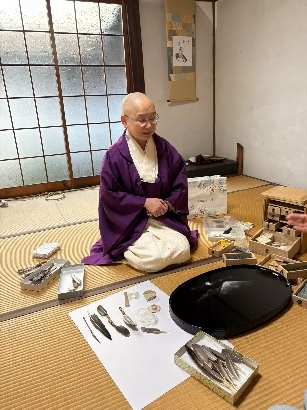
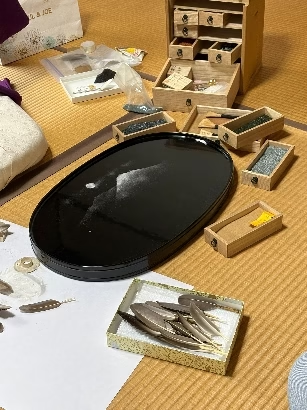
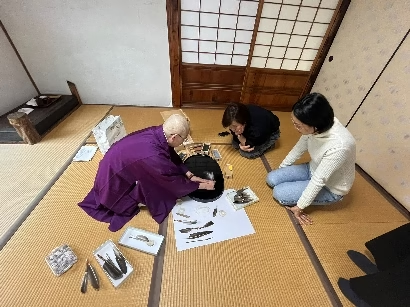
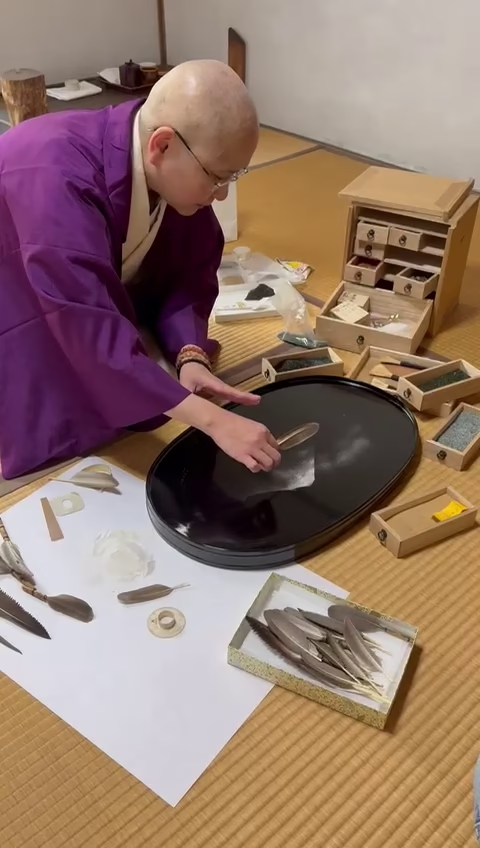
How we define art varies across cultures. At a temple in Kyoto, Japan, I encountered bonseki (盆石), a thousand-year-old form of tray landscape art. Using sand and carefully placed stones, the artist creates a fleeting scene—one that is typically shown to invited guests. After the event, it is gently wiped away, and the tray is ready for the next creation.
At Tokujō-myōin Temple, the abbess Yamada Jōkō explained that bonseki was once practiced by the aristocracy as a way of welcoming guests. These scenes were often accompanied by a poem composed specifically for the occasion. Guests were not merely observers; they were participants, invited to interpret the subtle meanings woven into both the landscape and the words.
In much of modern Western culture, impermanence is rarely associated with art. Art is often seen as the expression of individual creativity—something fixed, preserved, and displayed for a broad audience. It is expected to endure.
Bonseki, by contrast, exists only for a moment. Each piece is a one-time creation, its meaning unfolding within the shared space between host and guest. Once erased, it survives only in memory.
In today’s fast-paced world, we rarely allow ourselves the time to truly experience something so transient. Yet bonseki reflects a kind of richness—one rooted not in permanence or possession, but in attention, presence, and human connection. It reminds us that, in another time, people valued these quiet, intentional moments enough to make them central to their lives.
Today, bonseki is practiced by only a small number of people in Japan. The specialized tools are increasingly difficult to obtain, as the artisans who craft them grow fewer and often lack successors. Like the art itself, the tradition feels fragile—at risk of fading away.
And perhaps that is what makes bonseki so powerful.
Its beauty lies not in preserving it, but in experiencing it with others. It matters to us because it is shared – because it exists for someone else. In the end, bonseki leaves behind no object – only a memory. And perhaps that, in itself, is a kind of treasure.